Overview
The brief, in full
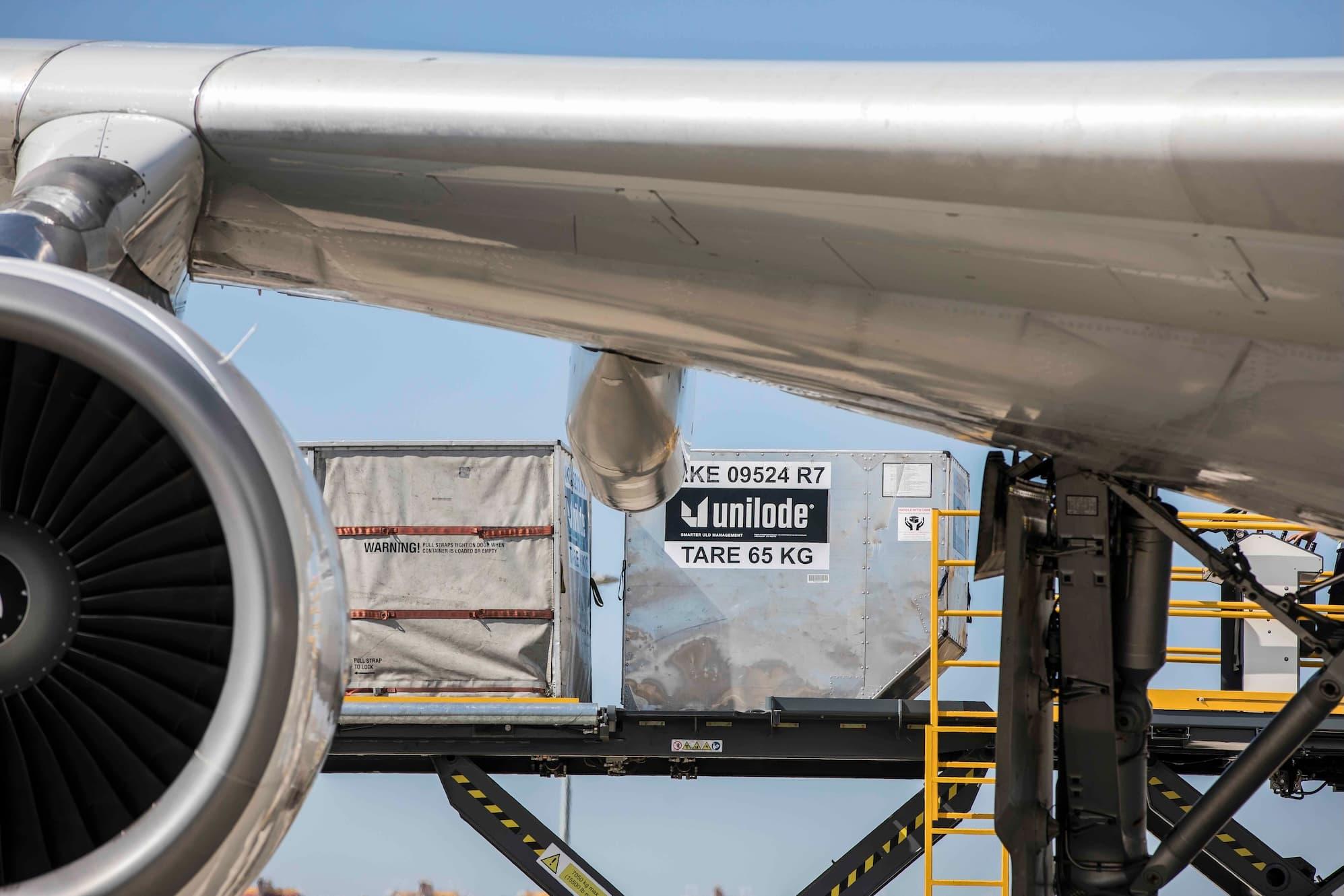
Unilode E-ULD digitises the entire ULD ground-handling workflow across 550+ airports worldwide. The goal: replace paper-based manual processes with a fast, reliable React Native app that works in the low-connectivity, high-pressure environment of airport cargo terminals.
Platform
React Native CLI, iOS & Android, shared codebase
Core Tech Stack
Hardware Integration
DevOps
Client
Unilode Aviation Solutions · Bangalore, India
Key App Features

Development Process
How it was built
A deliberate, phased approach — from workflow discovery through to global airport rollout — engineering reliability first at every step.
01
Discovery & Workflow Mapping
Embedded with Unilode's operations team to understand the full ULD lifecycle — from airport receipt and scanning through pairing, transfer, and inter-carrier handoffs. Mapped 8 distinct ground-handling workflows across roles: ramp agents, cargo supervisors, and airline operations managers. Identified the core pain points: manual paper forms, zero real-time visibility, and no standardised tooling across airports.
02
Architecture & BLE Integration
Chose React Native CLI for full native BLE module access — critical for the core scanning workflow. Architected the app around an offline-first data model: all scan operations write locally first, then sync when connectivity is restored. Integrated the BLE SDK for tag scanning with hardware-agnostic abstraction, supporting multiple tag types across the global Unilode fleet.
03
Core Workflows: Scan, Trace & Pair
Built the three foundational workflows that underpin every ground-handling operation. Scan: rapid BLE tag identification with real-time sensory data (temperature, humidity, shock). Trace: end-to-end ULD journey tracking across airports and airline carriers. Pair: associate ULDs with flights and containers with full batch support. Each workflow designed for single-hand, gloved operation in a noisy terminal environment.
04
Advanced Workflows: Collect, Transfer & OAL
Built the higher-complexity operational workflows: Collect Multiple ULDs for batch collection runs, LUC Transfers for container logistics handoffs, Delivery and Pickup tracking for ground crew coordination, and OAL (Other Airline) Tracking for inter-carrier ULD management. Each workflow surfaced contextual task lists, discrepancy alerts, and stock detail views to surface the right information at the right moment.
05
Reader Configuration & Multilingual
Built the Stationary Reader configuration module for automated ULD detection at fixed airport checkpoints — allowing supervisors to configure, test, and monitor fixed BLE readers directly from the app. Implemented multilingual support across all workflows with runtime language switching, supporting the diverse linguistic profile of Unilode's global ground crew workforce.
06
CI/CD, QA & Global Rollout
Implemented enterprise CI/CD pipelines using Azure DevOps, reducing deployment time by 40% and eliminating manual release bottlenecks. QA across 20+ device configurations covering both iOS and Android. Staged rollout through enterprise app distribution channels, with post-launch monitoring and iterative improvements driven by operational feedback from ground crews across multiple regions.
Integrations
The full technical stack
Every integration chosen to support Unilode's specific requirements — BLE hardware scanning, offline-first sync, multilingual workflows, and enterprise CI/CD.
BLE Tag Scanning
Native Bluetooth Low Energy integration for rapid ULD identification. Hardware-agnostic abstraction supports multiple tag types across the global Unilode fleet, with real-time sensory data (temperature, humidity, shock).
Stationary Readers
In-app configuration and monitoring of fixed BLE reader stations at airport checkpoints. Enables automated ULD detection without manual scanning intervention.
Multilingual
Available in multiple languages with runtime language switching — supporting the diverse linguistic profile of Unilode's global ground crew workforce across 550+ airports worldwide.
Azure DevOps
Enterprise project management, code review, and release pipeline orchestration for end-to-end automated delivery.
Unilode REST APIs
Real-time data synchronisation for ULD tracking, flight associations, stock details, work orders, and OAL inter-carrier management via secured enterprise REST endpoints.
SSO Enterprise Auth
Enterprise Single Sign-On authentication ensuring secure access control across Unilode's global workforce of airline operators and ground-handling agents.
Ground handling at 550 airports runs on people doing the right thing at the right time. The app makes the right thing the easiest thing.
Reflection
What I learned
Key Decisions
Offline-first architecture was the most important technical decision. Airport cargo terminals are notoriously low-connectivity environments, and an app that failed or lost data when the network dropped would be worse than paper. Every scan operation writes locally first and syncs opportunistically. The BLE hardware abstraction layer was equally critical — different airports use different tag hardware and any tight coupling would have created a maintenance nightmare.
- Offline-first: local write first, sync when connected
- BLE hardware abstraction to support multiple tag types globally
- React Native CLI for full native BLE and IoT module access
- Role-based UX — different workflows for ramp agents vs supervisors
Challenges Overcome
BLE scanning reliability in a busy airport terminal — surrounded by hundreds of other BLE devices, metal cargo containers, and high RF interference — was the hardest engineering challenge. Required careful RSSI filtering and tag de-duplication logic to prevent false matches. Multilingual runtime switching also had to work without app restarts, requiring a custom i18n architecture that didn't rely on static locale bundles.
- RSSI filtering and tag de-duplication for BLE in high-interference environments
- Offline sync conflict resolution for simultaneous scans on multiple devices
- Runtime language switching without app restart via dynamic locale loading
- LUC Transfer and OAL workflows required deep domain knowledge from operations team
What I'd Do Differently
I'd invest earlier in a unified scan analytics layer — understanding which ULD types get scanned most, which airports generate the most discrepancies, and which workflows cause the most friction would accelerate product iteration significantly. I'd also push for AR-assisted scanning (camera-based ULD identification as a fallback when BLE tags are damaged) from the start rather than treating it as a future enhancement.
- Scan analytics dashboard for operational insights from day one
- AR camera fallback for damaged or unresponsive BLE tags
- Push notification layer for urgent discrepancy alerts to supervisors
- Per-airport Datadog monitoring configured pre-launch, not post